
(704) 599-9810 | Worship Sundays @ 10:55 a.m.
(704) 599-9810 | Worship Sundays @ 10:55 a.m.
At Holy Covenant United Church of Christ in Charlotte, NC, worship is more than a weekly ritual—it’s a living expression of love, justice, and community.

Sometimes we need to get lost in order to be found.
God’s love seeks us out, not when we are perfect, but especially when we wander.
Fourteenth Sunday After Pentecost – Worship Service – September 14, 2025
Bulletin-09-14-2025
Gospel Lesson: Luke 15:1–10 (CEB) | Modern Lesson: Laurel C. Schneider
This Sunday, Pastor Chris preached a deeply moving sermon titled “Sometimes We Need to Get Lost.” Preaching from Luke’s parables of the lost sheep and lost coin, he challenged the idea that being “lost” should carry shame or stigma. Instead, he reminded us that wandering and questioning are part of being human—and sometimes even part of God’s design. To be lost, he said, is often the very place where transformation begins.
Pastor Chris reflected that God is never lost—we are. And yet God’s love is so fierce that it charges after us, refusing to rest until we are found. In contrast to the Pharisees’ narrow understanding of holiness, Jesus reveals a God who breaks open every boundary, goes to extraordinary lengths to seek us out, and celebrates our return with joy.
Drawing on Barbara Brown Taylor’s *Leaving Church: A Memoir of Faith*, Pastor Chris invited us to see “getting lost” as a spiritual practice—a path where questions are holy, wandering is welcome, and God meets us exactly where we are. Sometimes, he said, we only discover who we truly are when we’ve stepped outside the familiar and allowed ourselves to be reshaped by grace.
With pastoral tenderness and prophetic clarity, this sermon named the good news of God’s kin-dom: there is no shame in being lost, and no limit to God’s relentless searching. In Christ, every life has worth, every person is pursued, and every journey finds its home in God’s love.
“The most radical thing we can do as Christians is tell every LGBTQ+ person: you are loved, you are wanted, you are already enough.” — Jayne Ozanne

In the Potter’s hands, nothing is wasted.
Even in our brokenness, God reshapes us into vessels of beauty, purpose, and love.
Thirteenth Sunday After Pentecost – Worship Service – September 7, 2025
Bulletin-09-07-2025
Hebrew Lesson: Jeremiah 18:1–11 (CEB) | Modern Lesson: Kai Cheng Thom
This Sunday, Pastor Chris preached a deeply pastoral and prophetic sermon titled “In the Potter’s Hands Nothing Is Wasted.” Drawing from Jeremiah’s visit to the potter’s house, he reminded us that clay responds when pressed—it may not turn out right the first time, but in God’s hands it can always be reshaped. No matter how brittle, rigid, or broken we become, the Potter never abandons us. Instead, it is often in our broken moments that God’s hands do their best work.
Pastor Chris challenged us to ask: Where have we grown brittle? Where do we need to soften and yield so God can re-form us? He affirmed that nothing in our lives is wasted—not our grief, not our mistakes, not our unfinished stories. Like clay, we are made in the image of God, not finished but faithful, not perfect but purposeful. Woven with Kai Cheng Thom’s testimony of community care and healing, the sermon invited us to open ourselves to being reshaped as vessels of justice, compassion, and joy.
“We are not just clay—we are God’s image. Not finished, but faithful. Not perfect, but purposeful.”

Where God and neighbor meet.
In the stillness of Sabbath and the practice of justice, beloved community takes shape.
Eleventh Sunday After Pentecost – Worship Service – August 24, 2025
Bulletin-08-24-2025
Hebrew Scripture: Isaiah 58:9–14 | Modern Lesson: Archbishop Desmond Tutu
This Sunday, Pastor Chris preached a sermon titled “Where God and Neighbor Meet.” Drawing from Isaiah 58, he reminded us that true Sabbath worship is not escapism but engagement—where delight in God is inseparable from care for our neighbor. When we lift the yoke of oppression, feed the hungry, and honor each other’s dignity, our light breaks forth like the dawn.
Pastor Chris wove in the witness of Archbishop Desmond Tutu, who taught that to deny another’s worth is to wound God’s very image. Worship, then, is not confined to liturgy but lived out in acts of justice, compassion, and community. The sermon invited us to reclaim Sabbath as resistance to busyness and as a holy rhythm that re-centers us in God’s justice and joy.
“All human beings are created in the image of God—each one infused with priceless and intrinsic worth. To deny that worth to another is not merely unjust, it is blasphemous.”
— Archbishop Desmond Tutu
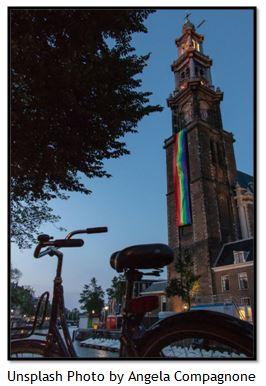
God’s mercy is always wider than we imagine.
As Charlotte Pride filled our streets this weekend, worship answered Jeremiah’s call: name false prophecy, reject fear, and embrace liberating love.
Tenth Sunday After Pentecost – Worship Service – August 17, 2025
Bulletin-08-17-2025
Hebrew Scripture: Jeremiah 23:23–32 | Modern Lesson: Rev. Broderick Greer (excerpt)
This Sunday, Pastor Chris led us through Jeremiah’s sharp warning against false prophets—voices that distort God’s word to preserve power and stoke fear. In contrast, true prophecy is grounded in God’s presence: it nourishes, liberates, and widens the circle of belonging.
Preaching in the heart of Charlotte Pride, Pastor Chris named how scripture has been weaponized against LGBTQ+ people and invited us to reclaim God’s voice of justice and mercy. He lifted up New Testament scholar Richard B. Hays’s journey from exclusion to affirmation—reminding us that theology is never abstract; it shapes real lives and families. The thread of scripture is not narrowing but widening: mercy, inclusion, and love.
Our worship affirmed what we hold dear at Holy Covenant: queer and trans lives are holy, beloved, and central to God’s story. Our praise within the sanctuary sends us out to live the offering God desires—acts of welcome, advocacy, and liberation.
“The most radical thing we can do as Christians is tell every LGBTQ+ person: you are loved, you are wanted, you are already enough.”
— Jayne Ozanne
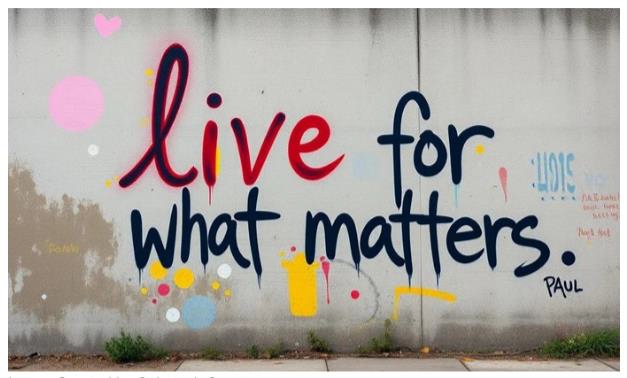
The holy is not found in more, but in enough.
In a world that glorifies accumulation, this week’s worship asked: What does it mean to live richly by God’s standards?
Eighth Sunday After Pentecost – Worship Service – August 3, 2025
Bulletin-08-03-2025
Gospel Lesson: Luke 12:13–21 (NLT) | Modern Lesson: John Pavlovitz
This Sunday, Pastor Chris invited us into a courageous conversation about money—not to shame or scold, but to reframe. Preaching from Luke 12, he reminded us that Jesus doesn’t shy away from wealth conversations. In fact, he speaks about money more than almost anything else—not to villainize it, but to show how easily it distorts our hearts and clouds our sense of hope.
The parable of the rich fool is not about savings or success, but about misplaced trust. The farmer in the story believed his abundance could shield him from mortality, uncertainty, and community responsibility. But, as Pastor Chris shared, “he was invested in everything except what truly matters.”
With deep empathy and prophetic clarity, Pastor Chris invited us to look at our own barns—what we accumulate, why we cling, and what we fear losing. Drawing on John Pavlovitz’s reminder that real life is found in how well we love, we were called to invest in the kind of wealth that endures: generosity, justice, relationships, and rest. In a culture of endless striving, this worship reaffirmed our call to live richly toward God—not in fear, but in faith.
“A life of faith isn’t measured in possessions or achievements, but in how well we love… That’s when we find what’s real. Everything else fades. But love endures.”
— John Pavlovitz
Sign up to receive our weekly newsletter.