(704) 599-9810 | Worship Sundays @ 10:55 a.m.
At Holy Covenant United Church of Christ in Charlotte, NC, worship is more than a weekly ritual—it’s a living expression of love, justice, and community.
🌙 Born Anew — In the quiet of night, questions become holy ground and the Spirit whispers of rebirth.
Worship Service – March 1, 2026 | Second Sunday in Lent
Scripture: John 3:1–8 (CEB)
On this Second Sunday in Lent, Holy Covenant gathered beneath the theme of rebirth. The cover image of Nicodemus meeting Jesus in the night set the tone: faith is not always loud or certain. Sometimes it comes as a quiet conversation, a courageous question asked in the dark.
Our prelude, “Lead Me to Calvary”, opened a reflective space. In the Centering Prayer, we asked God to quiet the noise within us and make us receptive to being made new. Again and again throughout the liturgy, we named this truth together: “We are being born anew.” In grief and love. In questions and awakening. In justice and in courage.
Singing “Gather Us In”, we proclaimed that new light is streaming even now. Our prayers of confession and transformation acknowledged how we sometimes resist change—clinging to certainty or fearing what transformation may cost. Yet the Words of Grace reminded us that God does not rush or force our becoming. The Spirit works patiently, inviting us to grow gradually, one moment at a time.
A Modern Lesson from Kahlil Gibran reflected on the quiet miracle of rebirth: that every ending prepares the ground for a beginning that could not have existed before. Then in John 3:1–8, we listened as Nicodemus struggled to understand Jesus’ words: “Unless someone is born anew, it’s not possible to see God’s kingdom.” Born of water and Spirit. Born beyond literalism. Born into mystery.
In his sermon, “Born Anew,” Rev. Christopher Czarnecki invited us to see rebirth not as a single dramatic moment, but as a lifelong unfolding. We are reborn when our hearts break open. Reborn when our compassion deepens. Reborn when we allow old versions of ourselves to fall away so that something truer can emerge. The Spirit, like wind, cannot be controlled—but it can be trusted.
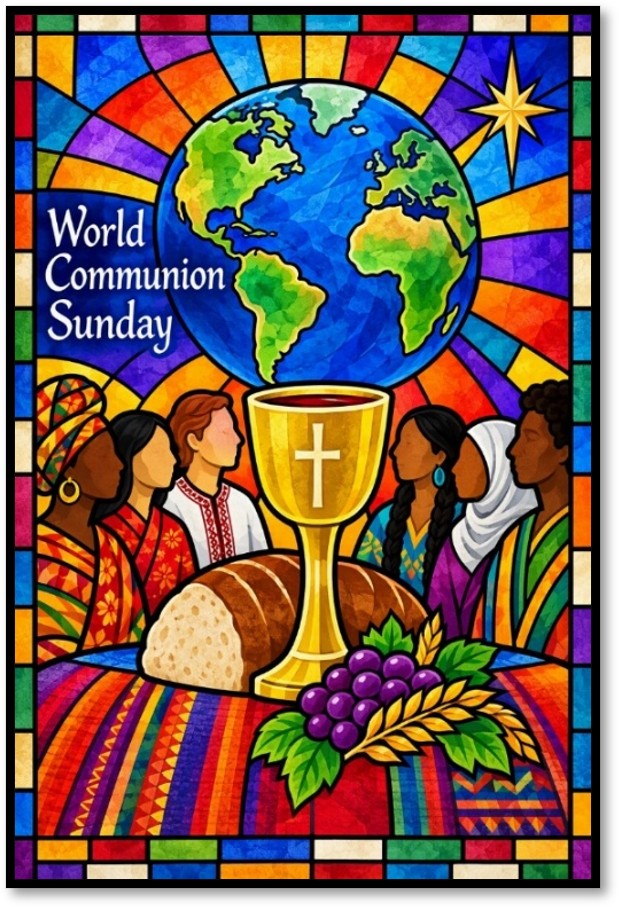
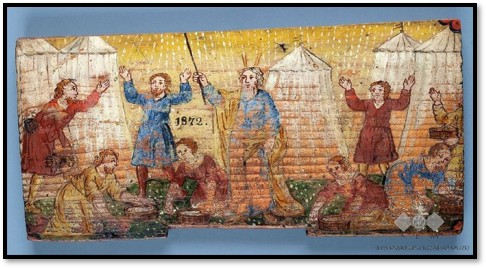
At the Mystic Supper, voices across generations reminded us that this table belongs to all. Bread was broken and the cup lifted as signs that God’s love and presence remain constant through every stage of becoming. In sharing Communion, we practiced what it means to be one body—diverse, questioning, beloved, and continually made new.
We closed singing “Lord Jesus, Who through Forty Days”, stepping further into Lent with humility and hope. The benediction sent us into the week carrying this assurance: transformation is not a threat. It is grace. And we are always, always being born anew.
“The Spirit blows wherever it wishes… and we are invited to trust the wind.”

🌵 Out of the Desert — At the edge of promise, fear distorts vision, but God restores courage and calls us forward in faith.
Worship Service – February 22, 2026 | First Sunday in Lent (Black History Month)
Scripture: Numbers 13:27–33; 14:6–10a; 14:40–45
This Sunday at Holy Covenant United Church of Christ, we stepped into Lent through the wilderness. The desert landscape on our bulletin cover reminded us that promise is rarely reached without first passing through uncertainty. We gathered, as the liturgy declared, at the edge of promise—a place where fear and faith stand side by side.
The prelude, “Lonesome Valley,” carried the sound of solitary courage, followed by the sung welcome of “Salaam”—peace spoken over every race and every place. In the Call to the Heart, we named the giants that loom in our lives—barriers, delays, distorted perceptions—and answered together with resolve: “We will not turn back. We walk together in love.”
Our hymn, “Lord, I Want to Be a Christian,” became a prayer for formation—more loving, more holy, more Christlike. In our Black Christian History Moment, we honored Dr. Katie Cannon, remembering her pioneering voice in womanist theology and Christian ethics, and her insistence that faith must be lived in embodied justice.
The anthem, “N’kosi Sikelel’i Afrika,” widened our prayer beyond ourselves, blessing nations and peoples in need of healing and protection. Scripture from Numbers confronted us with a hard truth: the scouts saw abundance in the land, yet described themselves as grasshoppers before giants. Fear shaped their perception. Joshua and Caleb, however, saw the same landscape and declared, “Do not fear… the Lord is with us.”
In her sermon, “The Cost of Delay: A Perception Disorder at the Edge of Promise,” Rev. Windy Allison named how fear can quietly distort discernment. Delay is not neutral. When we linger too long in anxiety or self-doubt, opportunities for transformation shrink. Lent, she reminded us, is a season for healing our vision—learning to see not as grasshoppers before giants, but as beloved people walking with God.
The congregation responded in song with “Oh Freedom”, declaring liberation not as abstraction but as lived commitment. “We’ve Come This Far by Faith” sent us forward grounded in resilience rather than bravado. The benediction echoed as promise and marching orders alike: We will walk with God. We will go rejoicing till the kin-dom has come.
“At the edge of promise, fear distorts vision — but love restores courage.”

A Service of Ashes • Turning Toward Repair • Holy Covenant UCC
🕯️ “Remember that you are dust… Yet, out of death comes new life.” — An Ash Wednesday journey of truth-telling, release, and transformation.
Worship Service – February 18, 2026 | Ash Wednesday (First Day of Lent)
Scripture: Psalm 51 (CEB)
On Ash Wednesday at Holy Covenant United Church of Christ, we entered Lent the way we most need to: not by pretending we are fine, but by telling the truth with tenderness. We were welcomed into a Service of Ashes that named both the ache we carry and the hope God keeps offering—moment by moment, breath by breath, new beginning by new beginning.
Our Call to Worship framed the night as a shared pilgrimage: a journey of learning to love, learning the ways of peace, and returning home to God—together. We came to listen to each other’s stories, to acknowledge our complicity in the state of the world, to receive forgiveness and to practice reconciliation as authentic community.
The opening hymn, “Near to the Heart of God”, did what true worship does: it made room. A place of quiet rest. A place of comfort. A place of release. Then the opening prayer asked for what Lent always asks for—clean hearts, renewed spirits, and lives worthy of love.
In Psalm 51, we heard the raw honesty of a soul that refuses denial: Create a clean heart for me, O God… put a new, faithful spirit deep inside me. It was confession without self-destruction—truth spoken in the presence of mercy.
The hymn “Sunday’s Palms Are Wednesday’s Ashes” held up a mirror: naming jealousy, pride, impatience, wasted resources, ignored suffering—then turning that naming into offering. Not to wallow, but to return. Not to spiral, but to begin again.
The heart of the service came through Pastor Chris’ reflection on han—a Korean word for the deep sadness and suffering that emerges from violence and injustice, a sense of powerlessness that can become a heavy “lump” in a life. Han was described as tangled webs of wrongs and hurts—fear, resentment, hostility, neglect—layer upon layer. And then we were invited to do something holy: to gather our own layers, and bring them into the light.
In a symbolic act of transformation (han-pu-ri), we wrote what needed release—what needed forgiveness, what needed to die—then carried it to the fire. We did not burn these truths to forget them, but as a sign that we will be aware and choose differently. We offered our han to God, praying it might be transformed into power and hope.
Afterward, the ashes of our prayers were mixed with the ashes of last year’s palms—a profound sign that our endings are never wasted, and that even grief can become soil. Then came the invitation that makes Ash Wednesday unmistakably real: traditional ashes and glitter ashes.
Glitter ashes were offered as a visible witness that repentance and hope can coexist—and as a reclaiming of this day for those harmed or excluded by the church. Glitter, a symbol of resilience and flourishing in the queer community, was blended with ashes to proclaim a faith that reconciles rather than harms, a faith that reflects Christ’s radical and boundless love for all.
As each person received the sign of the cross, we heard the ancient words—“Remember that you are dust, and to dust you shall return.” And we answered with a promise shaped by Easter before Easter arrives: “Yet, out of death comes new life.”
We closed with prayer that God can hold what we cannot admit, name what we cannot speak, remember what we try to forget—and make us whole through Christ. Then we sang “Abide with Me”, a hymn for twilight seasons, trusting the One who stays when other helpers fail.
“Repentance is not punishment—it is turning. And even now, God is already at work: releasing, renewing, making all things new.”

✨ Let Us Draw Near — Transfiguration Sunday invites us to see with new eyes: beyond fear, beyond separation, toward the light of divine love that changes everything.
Worship Service – February 15, 2026 | Transfiguration Sunday (Black History Month)
Scripture: Matthew 17:1–9 (NRSV)
This Sunday at Holy Covenant United Church of Christ, we gathered on Transfiguration Sunday—the mountaintop moment when Christ’s radiance reveals what is most true, even when we’re still learning how to see. From the first notes of the prelude, “All Day, All Night” (arr. K. Blackwell-Plank), we were gently reminded: God’s presence is not occasional. It is constant—steady as breath, luminous as love.
Pastor Chris led a Centering Prayer that met us with tenderness and holy honesty—inviting us to notice what we carry, where we hold tension, and what walls we’ve built around the heart. Then came a courageous petition: that the Spirit would awaken in us the Christ Mind, helping us to see beyond fear, beyond division, beyond the limiting stories that keep us small—so we might draw near to what is real, sacred, and true.
In the Call to the Heart, we named the wide, generous truth of God’s welcome: that we arrive with different stories, identities, and journeys—some weary, some curious, some doubting—yet all are beloved, all are worthy, all are seen. We prayed for a transformed vision: to see ourselves, one another, and this world as God sees—beloved, beautiful, and always becoming.
As part of our Black History Month observance, we honored Sister Dr. Thea Bowman in the Black Christian History Moment—celebrating her witness and contribution to the breadth of Christian faith. Our worship continued to be carried by the music of Richard Smallwood, including “Lead Me, Guide Me,” “I Love the Lord,” and the prayerful refrain of the sung response, “Rain Down.”
A Modern Lesson from Rev. Dr. Yvette Flunder offered a clear, liberating word: God keeps calling us beyond inherited categories, and real transformation begins when we recognize that what we were taught to fear may actually be holy. Seeing with new eyes disrupts old certainties—but it also frees us to love more fully. That freedom, we were reminded, is nothing less than gospel.
Our Gospel reading, Matthew 17:1–9, brought us to the mountain—where Jesus is transfigured before Peter, James, and John: face shining like the sun, clothes bright as light, and the voice from the cloud declaring, “This is my Son, the Beloved… listen to him!” Fear fell heavy on the disciples, but Christ’s touch met them with mercy: “Get up and do not be afraid.”
In “Let Us Draw Near,” Pastor Chris proclaimed the Good News that this holy light is not for spectacle, but for transformation—drawing us nearer to God and nearer to one another. And from that nearness, generosity flows: the offering was framed as a natural response to changed vision—open hands becoming instruments of love, justice, and healing.
We were sent out singing and marching in hope—“Siyahamba” echoing as both prayer and promise: We are marching in the light of God. On the far side of the mountain, we stepped back into the world with hearts more awake, eyes more honest, and a courage that comes from being touched by holy light.
“Seeing with new eyes takes courage—but it also frees us to love more fully.”

✊🏾 Racial Justice Sunday: The Gospel Is Not Neutral — Worship as public witness: a call to moral courage, deep belonging, and the dismantling of racism as sacred work.
Worship Service – February 8, 2026 | Fifth Sunday After the Epiphany (Racial Justice Sunday)
This Sunday at Holy Covenant United Church of Christ, we gathered on the Fifth Sunday After the Epiphany for worship centered on truth-telling, belonging, and the holy urgency of justice. In the heart of Black History Month, our service proclaimed that Christian faith cannot be neutral in the face of injustice—and that the work of racial equity is not peripheral to the gospel, but central to it.
From the opening welcome through the closing blessing, worship held a steady thread: we are called to live a faith that restores dignity, disrupts harm, and builds beloved community. The Centering Prayer invited each of us to bring our whole selves—doubter and believer, sinner and saint—into God’s presence, awakening to compassion and readiness for courageous love.
In the Call to the Heart, we named aloud what many systems prefer we keep silent: that racism still divides, that repentance must be more than words, and that God calls us to dismantle oppression with sustained commitment. Worship did not ask us to look away. It asked us to look clearly—and to respond.
During the Black Christian History Moment, we honored Richard Smallwood, celebrating his enduring contribution to the life of faith through sacred music. His song, “I Love the Lord,” became both testimony and prayer—reminding us that Black faith has long carried hope through struggle, and praise through pain.
Our Modern Lesson, drawn from Kelly Brown Douglas’ Stand Your Ground, named racism as a theological distortion that denies the image of God in Black bodies—and insisted that faithfulness requires moral courage and public witness. The message was clear: the church’s mission is not comfort that maintains the status quo, but justice that aligns with the God of life.
We were deeply blessed to welcome Bishop Tonyia Rawls to proclaim The Good News. Her presence and voice reinforced the day’s spiritual center: that liberation is not an add-on to Christian life, but part of its heartbeat. Through prayer, proclamation, and song, worship affirmed a gospel that stands with those most harmed—and calls the church to stand there too.
Even our generosity was framed as discipleship. In the Invitation to Generosity and Prayer of Dedication, we remembered that justice requires more than intention—it requires investment, repair, and the courage to build a world where all can thrive.
“The gospel is not neutral in the face of injustice. It stands on the side of life, dignity, and liberation.”

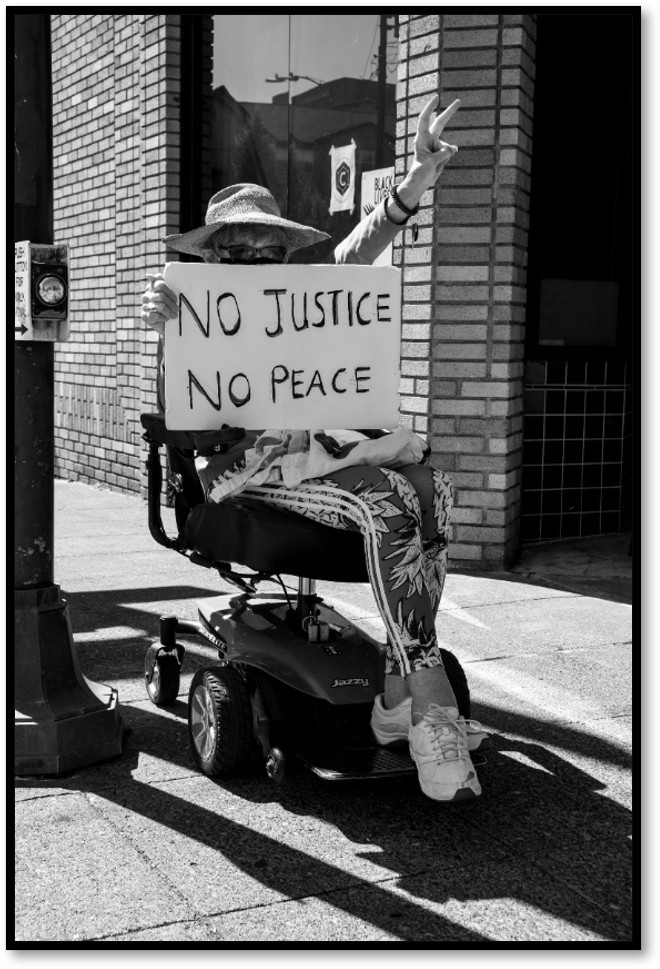
✊🏾 Answer Me, White Church! Answer Me! — A Black History Month call to truth-telling, repentance, and faithful repair: not performative religion, but justice, loving-kindness, and humility.
Worship Service – February 1, 2026 | Fourth Sunday After the Epiphany (Black History Month)
Scripture: Micah 6:1–8 (NRSV)
This Sunday at Holy Covenant United Church of Christ, worship met us online only due to inclement weather—yet the Spirit was anything but distant. In this livestream gathering, we entered the Fourth Sunday After the Epiphany carrying the sacred weight and living witness of Black History Month, listening for God’s voice not as comfort alone, but as holy summons. (Service date and context: February 1, 2026.)
Our worship opened with prayer that honored Black faith as communal lament and resilient hope—prayer that has sustained people through the impossible, becoming freedom songs and “coded maps to liberation.” From the first moments, we were invited to bring our whole selves—body, mind, and spirit—into a truth that does not flinch.
In the Call to the Heart, we named a cloud of witnesses—Harriet Tubman, Jackie Robinson, Maya Angelou, James Baldwin, Ruby Bridges, Pauli Murray, Fannie Lou Hamer, Sidney Poitier, Langston Hughes, John Lewis—each a living testimony that faithfulness is not passive. Their stories became our prayer: may we embody them, continue their work, and be courageous enough to finish what they started.
During our Black Christian History Moment, we honored James H. Cone, widely recognized as the father of Black Liberation Theology. In the Modern Lesson—adapted from Cone’s The Cross and the Lynching Tree—we heard the sobering insistence that the church cannot claim reconciliation without truth, nor grace without aligning itself with the oppressed. Repentance, we were reminded, is not sentiment; it is turning.
Our scripture from Micah 6:1–8 brought the people to court—God pleading a case, demanding an answer, refusing religious theater. The prophet’s clarity landed like thunder and mercy at once: what does the Holy One require but to do justice, love kindness, and walk humbly with God.
In his sermon, “Answer Me, White Church! Answer Me!” Pastor Chris offered a courageous and necessary word for this season: that faith must disturb injustice, not bless it; that silence is not neutrality; and that the church’s credibility depends on truth-telling, repair, and the costly work of justice. The invitation was not to shame, but to transformation—moving from comfort to accountability, from performative gestures to lived solidarity.
Communion carried the same holy urgency. The table was proclaimed as a place where barriers are broken down, where the excluded are welcomed, and where we are strengthened for the work of justice, equity, and peace—nourished not for escape, but for faithful action in the world.
“God is not impressed by offerings that avoid the heart of the matter—justice, loving-kindness, and humble faithfulness.”

🤝 Ending Conflict: Choose Christ and One Another — A call to listen deeply, love generously, and remain united in mission even when we disagree.
Worship Service – January 25, 2026 | Third Sunday After the Epiphany
Bulletin – 01-25-2026
Scripture: 1 Corinthians 1:10–18 (CEB)
This Sunday at Holy Covenant United Church of Christ, we gathered on the
Third Sunday After the Epiphany for worship shaped by care, intention, and resilience. Due to inclement weather, today’s service was pre-recorded and thoughtfully woven together using both current segments and moments from past worship services. Though we were not gathered physically in the sanctuary, we remained deeply connected in prayer, reflection, and shared purpose.
Worship centered on a truth both ancient and urgently present: conflict is inevitable in community, but division does not have to be. From the opening welcome to the final blessing, the service invited us to consider how faith calls us not to avoid disagreement, but to navigate it with courage, humility,
and love.
Our scripture from 1 Corinthians 1:10–18 addressed a divided church, where factions and loyalties threatened to fracture the community. Paul’s words reminded us that the heart of Christian faith is not about being right, winning arguments, or aligning with personalities—but about remaining centered in
Christ and united in shared mission.
In his sermon, “Ending Conflict: Choose Christ and One Another,” Pastor Chris offered practical, pastoral guidance for living this calling. We were invited to speak directly to one another rather than about one another, to listen with openness instead of defensiveness, to seek common ground, and to
release the need to be right in favor of being in relationship.
Throughout the service, prayers, readings, and music reinforced the sacred work of reconciliation. The Prayer of Transformation named our tendency to prioritize certainty over compassion, while the Words of Grace reminded us that forgiveness and new beginnings are always possible. Even when
gathered apart, worship affirmed that unity is sustained by intention, humility, and love.
Music served as both witness and prayer—from “They’ll Know We Are Christians by Our Love” to“We Are One in the Spirit,” echoing the call to live our faith not as abstraction, but as embodied commitment. Together, the service proclaimed that choosing Christ means choosing one another—again
and again.
“Choosing Christ means choosing relationship over division, love over certainty, and mission over ego.”

✨ Called to Be Light — A reminder that God names us beloved before asking anything of us, and then calls us to let that love shine into the world.
Worship Service – January 18, 2026 | Second Sunday After the Epiphany
Scripture: Isaiah 49:1–7
This Sunday at Holy Covenant United Church of Christ, we gathered on the Second Sunday After the Epiphany to reflect on calling, courage, and the quiet persistence of light. Worship invited us to consider what it means to be named by God—not after we feel prepared, but before—and to trust that belovedness is the beginning of faithful action.
From the opening prayer, we were reminded that we come carrying the weight of the world and the doubts we hold about our own adequacy. And yet, we were invited to center ourselves in the truth that we are loved simply because we belong to God—formed not only for comfort, but for service.
Our scripture from Isaiah 49:1–7 named a servant who feels weary, unseen, and unsure whether their labor has mattered at all. Into that exhaustion, God speaks a deeper truth: the work is larger than imagined, the calling wider than expected, and the light meant not only for one people, but for all nations.
In his sermon, “Called to Be Light,” Pastor Chris invited us to release the myth that readiness precedes calling. Drawing on voices from the civil rights movement and prophetic faith, we were reminded that justice grows when people trust that their contribution matters—even when the destination remains unclear.
The service wove together scripture, prayer, and witness to affirm that justice is not the absence of pain, but the refusal to let pain have the final word. Through communal prayer and song, we named our doubts honestly, received words of grace freely, and were reminded that God equips those God calls.
Music carried the theology of the day with power and tenderness—from the opening spiritual “Nobody Knows the Trouble I’ve Seen,” to the stirring anthem “Roll Down, Justice,” and the communal hymn “We Shall Overcome.” Together, worship reminded us that faith is not passive—it sings, it marches, it hopes.
“God does not call us because we are ready; God calls us because love demands a response.”

💧 Baptism of Jesus — A holy reminder that we are already known, already claimed, and already beloved… and that belovedness commissions us to live with courage.
Worship Service – January 11, 2026 | Baptism of Christ
Scripture: Matthew 3:13–17
This Sunday at Holy Covenant United Church of Christ, we gathered to celebrate the Baptism of Christ—a day centered not on achievement, but on identity. In the waters of the Jordan, Jesus is named beloved before he performs a miracle, preaches a sermon, or takes a single step toward the cross. Worship invited us to receive that same truth: we are loved, claimed, and called—not because we have earned it, but because we belong to God.
Our centering prayer framed the service with gentleness and clarity: before we speak or sing or try to make sense of anything, we remember that we are already known and already loved. The Call to the Heart echoed this invitation, drawing us toward “the welcoming waters of grace” and the voice that calls us precious and whole.
In the Gospel reading, Matthew 3:13–17, Jesus comes to be baptized by John, and heaven breaks open: the Spirit descends like a dove, and the voice of God declares, “This is my Son, the Beloved, with whom I am well pleased.” The story reminds us that belovedness is not sentimental—it is foundational. It is the grounding that makes faithful living possible.
Pastor Chris preached a sermon titled “The World Is Waiting and the Waters Are Calling,” inviting us to hear baptism as both affirmation and commissioning. The waters tell the truth about who we are—and then they send us out. God’s love is not meant to stay contained in private comfort; it becomes public courage. To remember we are beloved is to step into the world with a steadier heart, a clearer purpose, and a deeper commitment to justice.
A particularly powerful moment in the service was the Affirmation of Baptism. Congregants were invited forward to receive a blessing with water from the baptismal font—whether or not they have ever been baptized—because God’s love exists before and beyond any ritual. As the choir sang “Wade in the Water,” we were reminded that God still “troubles the water,” calling us into renewal, solidarity, and the messy places where love becomes action.
We also marked a significant moment in the life of the church through the installation of Elders and Deacons and the recognition of service from the Consistory Class of 2025. With prayer, covenant, and the laying on of hands, we celebrated leaders who have answered God’s call for the flourishing of the congregation and the healing of the world.
“Knowing we are beloved gives us the courage to live, to love, and to seek justice.” — bell hooks

🕊️ And So I Chose to Begin Again — A reminder that new beginnings are not about erasing the past, but choosing how we step forward.
Worship Service – January 4, 2026 | Second Sunday After Christmas
Scripture: Jeremiah 31:7–14
This Sunday at Holy Covenant United Church of Christ, we gathered on the Second Sunday After Christmas and the first Sunday of the new year—standing at a threshold where memory and possibility meet. Worship invited us not to rush past what has been, but to step deliberately into what is becoming.
From the opening prayers to the final blessing, the service was shaped by the language of homecoming—not as a return to something lost, but as a reawakening to a sacred presence that has never left us. We named the weight of the past year honestly, while affirming that we are not defined by it.
Our scripture from Jeremiah 31:7–14 offered a vision of gathering and restoration: a people brought home, mourning turned to joy, lives renewed like a lush garden. This was not a promise of ease, but of movement—God leading the people forward with intention, care, and hope.
In his sermon, “A Word for the Journey This Year,” Pastor Chris invited the congregation to consider the year ahead not as a blank slate, but as a call. A call to begin again—not by striving to become someone new, but by choosing to live more fully into who we already are, grounded in God’s presence and love.
A central moment in worship was the White Stone Ceremony, a sacred practice inviting each person to listen for a word to guide their intentions, actions, and becoming in the year ahead. These words were received not as resolutions to be perfected, but as invitations to be lived—quiet companions for the journey forward.
Music carried this theology throughout the service, offering welcome, courage, and resolve. From the opening tribute to Richard Smallwood to hymns that proclaimed hope, presence, and liberation, worship reminded us that faith is not only believed—it is practiced, sung, and embodied.
“We are no longer defined by our past, but by who we are choosing to become.”
Sign up to receive our weekly newsletter.