
(704) 599-9810 | Worship Sundays @ 10:55 a.m.
(704) 599-9810 | Worship Sundays @ 10:55 a.m.
Nov 11, 2025

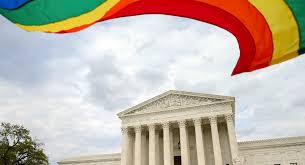
A moment of justice and joy as love’s promise endures.
A moment of gratitude for Holy Covenant, the UCC, and LGBTQ+ families everywhere
Yesterday, the U.S. Supreme Court declined to revisit the landmark marriage-equality precedent that has safeguarded LGBTQ+ marriages nationwide since 2015. For Holy Covenant and the wider United Church of Christ, this is more than a legal footnote, it is an affirmation of what we’ve always believed and known — love cannot be confined by people or parameters.
In 2014, Holy Covenant families and clergy joined a first-of-its-kind, faith-based legal challenge to North Carolina’s marriage ban—asserting that the state’s restrictions violated both equal protection and the freedom of clergy to perform weddings in their houses of worship. That case helped open the door to marriage equality in North Carolina, setting the table for the nationwide ruling the next year.
“We believed then—and we believe now—that blessing love is not the state’s to forbid nor the church’s to withhold.”
The United Church of Christ’s advocacy for LGBTQ+ dignity spans decades—rooted in Scripture’s call to justice and the Gospel’s wideness in mercy. From early statements in the 1990s supporting equal marriage rights to the 2005 General Synod resolution affirming marriage equality, our denomination has stayed the course: full inclusion, public witness, and pastoral care for all families.
Yesterday’s decision is both reassurance and invitation: reassurance that the marriage of those in our pews remains protected, and invitation to deepen our practice of joy, protection, pastoral care, and support of the inclusivity and diversity of love.
At Holy Covenant, we mark this news with gratitude—and with renewed commitment to walk alongside LGBTQ+ members, couples, parents, teens, and elders.
“Yesterday’s Supreme Court ruling upholding marriage equality is a victory for LGBTQ+ rights. As people of faith, we affirm that God’s image is reflected in every person and every loving relationship.”
“Too often, the Bible has been misused to condemn same-sex relationships—something about which scripture says very little—while ignoring the broader, recurring themes of God’s call for justice, compassion for the poor, love of neighbor, and liberation for the oppressed.”
“For some in our congregation, this attempt to repeal marriage equality has reopened old wounds or stirred valid fears and concerns. To you, I want to say once again, Your love is holy, your marriage is sacred, and the sanctity of love, like our God, is far greater than we could ever imagine.”
— Rev. Christopher Czarnecki, Senior Pastor
“It’s important to our family to belong to a church that honors and affirms loving relationships and marriage equality for all people as we seek to build a just world.”
— Meg Houlihan, Racial Justice & Equity Ministry Team Lead
“Our love is sacred. Our love is blessed. Our love is holy! Love is for everyone! Our faith and connection to the Divine means trusting that love holds us together even through threats by conservatives and those bound by hatred and fear of inclusion and diversity. Today we rest in God’s faithfulness, and we rise to keep welcoming, blessing, and defending every beloved story.”
— Rev. Melissa McQueen-Simmons
💬 Share a word of gratitude or encouragement
Your story and your joy strengthen this community.
#HCUCCEverywhere #ProgressiveClergy #RestInGod #FaithForAWorriedPeople #MarriageEquality #LGBTQFaith #UCC #LoveIsLove #OpenAndAffirming #JusticeAndPeace #EqualityMatters #UCCJustice #FaithAndFreedom #InclusiveChurch #RacialJusticeAndEquity #PrideInFaith #ProgressiveChristianity #FaithForAllPeople #UCCHistory #HolyCovenantUCC #LGBTQChristian #SabbathPeace #YearOfWellness #StandFirmAndHoldFast #UCCEverywhere #UCCONA #BeTheChurch #UCCJusticeAndWitness #FaithForJustice #LoveWins
Oct 16, 2025


by Alix Felsing
We went to Greensboro to learn more about the sit-in that desegregated the Woolworth lunch counter in 1960. We returned with new perspectives, and so much more.
Nearly three dozen people made the Oct. 4 pilgrimage, most by bus, to the International Civil Rights Center & Museum in Greensboro. Holy Covenant’s Racial Justice and Equity Team sponsored the trip and arranged for a tour of the museum, which includes the original lunch counter and is housed in the former Woolworth building.
“I was deeply moved by the conviction and intentional bravery of the students—especially the freshmen,” RJE member Ann Hooper wrote when asked for her initial reflections. “Would I have had that kind of courage at their age? Do I now? That was the question our small group of four kept returning to on the bus.”
It is one thing to know that the “Greensboro Four”—freshmen at what was then called the Agricultural & Technical College of North Carolina—staged a sit-in that led to desegregated restaurants in Greensboro. It’s another to realize that the women of nearby Bennett College did the planning, the sit-in lasted for months, the sit-in expanded as students took turns spelling each other amid the ugly backlash, and that high-school students stepped in to continue the sit-in during the summer when the college students went home.
The experience “made me think about what all those before us endured and how we should honor them more,” RJE member Terrence Hayes wrote. “But it also made me consider and fear the ground we are losing today, right now, on those gains.”
The museum placed all of this in the turbulent and violent context of the Civil Rights era. One wall was full of mug shots of the people—Black and White, men and women—who were arrested for demonstrating for equal rights. Another wall listed dozens of names of people who were murdered for registering people to vote, and for supporting people who could not speak out.
It meant a lot to RJE member Anne Hayes to be surrounded by people who want to learn and grow, and who want to support one another during this journey.
“The time was troubling as well,” she wrote. “Being reminded of and learning anew the atrocities of our past, and noting that we remain as a society STILL facing ongoing acts of racism and hatred, was scary, angering and filled with waves of sadness.”
From the museum, we visited the campus of N.C. A&T State University to see the February One monument honoring Ezell Blair Jr., Franklin McCain, Joseph McNeil and David Richmond. We stopped at Bennett College to get a glimpse of where the sit-in plans were made. We drove past the Magnolia House as we began our way home. Known as the Magnolia Hotel, it was listed in the Green Book as a safe place for Black travelers to stay and is one of only four remaining Green Book sites in North Carolina.
We returned to Charlotte in awe of the planning, perseverance and bravery that went into Civil Rights actions that made our world more equitable amid horrific cruelty and violence. We returned grateful for the fellowship that strengthened our friendships and our community on this journey. And we returned asking ourselves what’s next, and praying for courage to continue this work.
“What continues to weigh on me is how the daily ‘noise’ often drowns out the ongoing injustices faced by marginalized communities,” Hooper wrote. “So much of our history remains untold or ignored. As white people, we have a responsibility to learn it, honor it, speak it, and fight for full equality. Until prejudice and discrimination are eradicated, true progress will remain out of reach.”
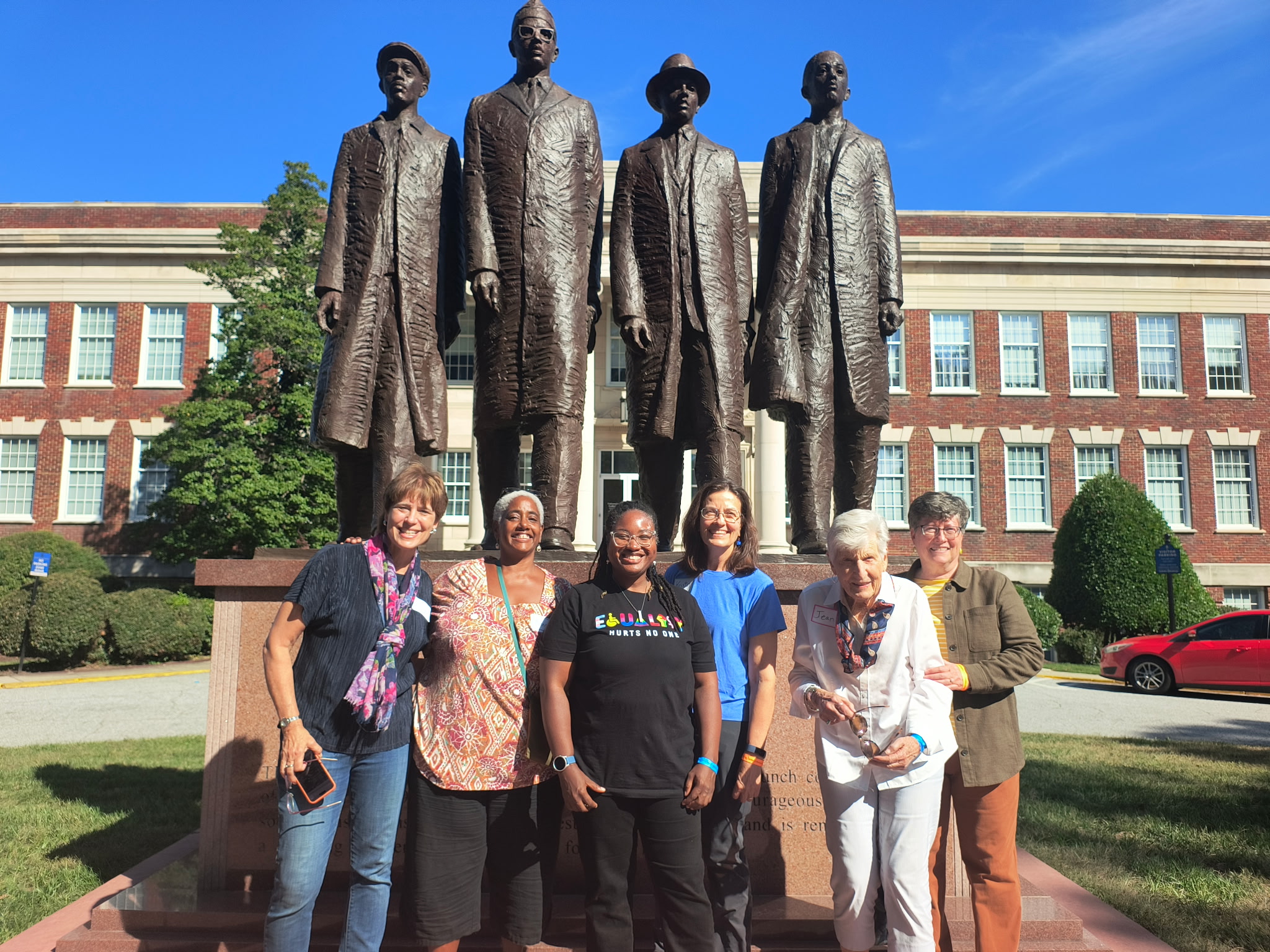


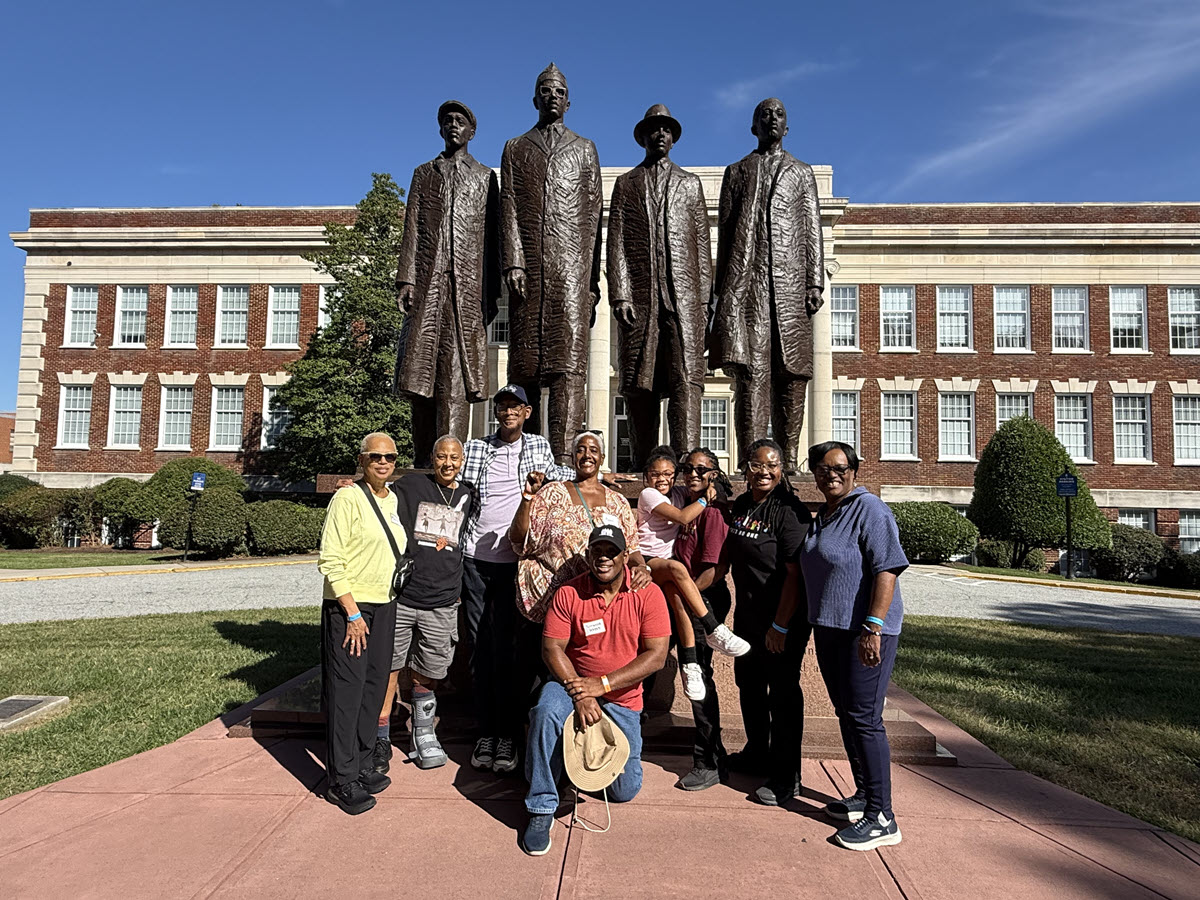
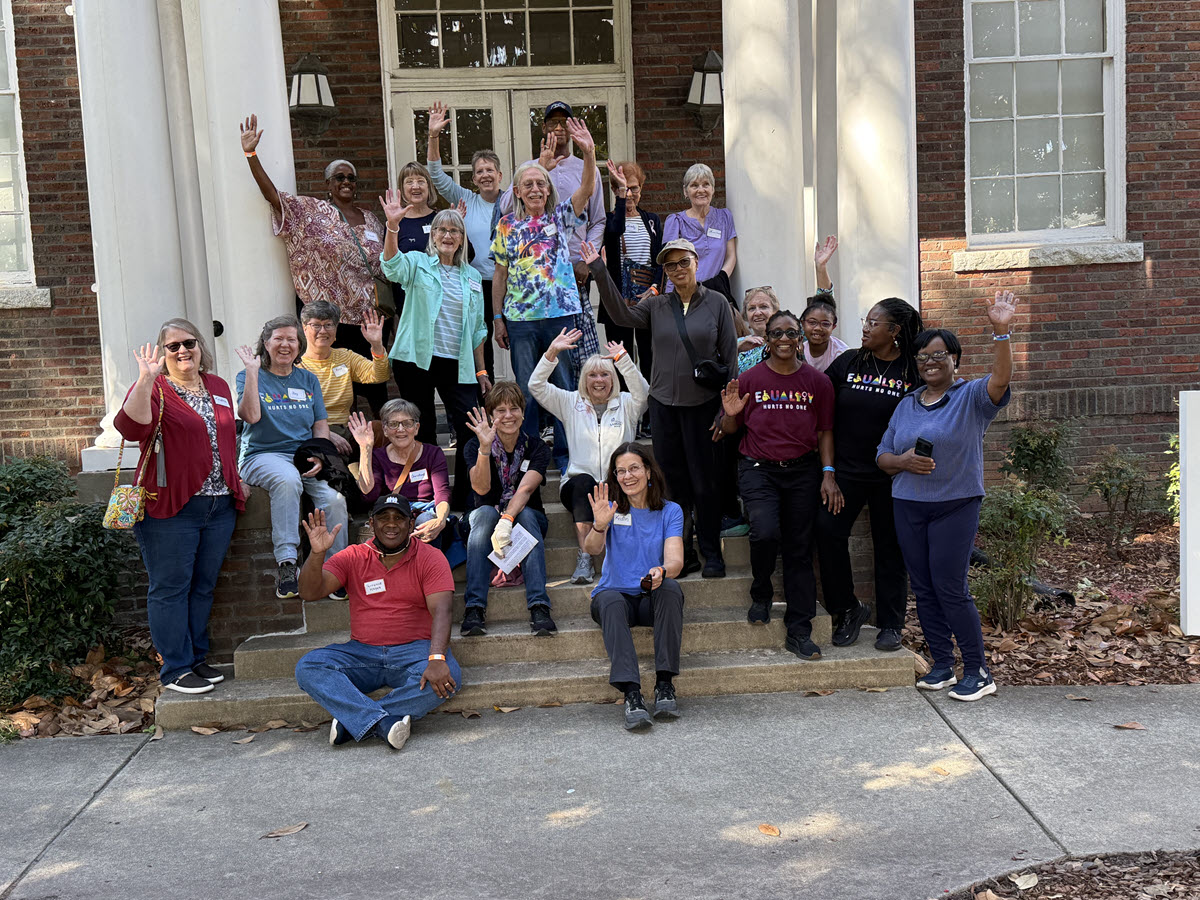
The RJ&E Ministry at Holy Covenant UCC helps our church “seek justice” through learning, dialogue, and action. Grounded in faith and guided by Isaiah 1:17, the team cultivates inclusion, awareness, and advocacy—creating spaces for courageous conversation, anti-racism education, and public witness in Charlotte and beyond.
RJ&E members coordinate learning opportunities (like this Greensboro pilgrimage), host discussions and book studies, uplift community partners, and invite the congregation into concrete steps toward equity and reconciliation. Their work strengthens our church’s call to radical welcome and collective liberation. Do you want to get involved:
New hearts and hands are always welcome as we continue learning, listening, and acting for justice together.
Sign up to receive our weekly newsletter.
